
Acrylic vs Canvas Prints: Which Is Right for Your Fine Art Photography?
If you’ve been shopping for fine art photography, you’ve almost certainly landed on this question: acrylic or canvas? These are the two most talked-about options in the market, and they couldn’t be more different in how they look, feel, and perform over time.
I’ve been handcrafting fine art photography prints in my Calgary studio for over 15 years. I’ve worked with both materials extensively — and I have a clear opinion on which one wins when it comes to true fine art photography. But I also believe in giving you the full picture so you can make the right choice for your space, your budget, and your taste.
Let’s break it down.
What Is an Acrylic Face-Mounted Print?
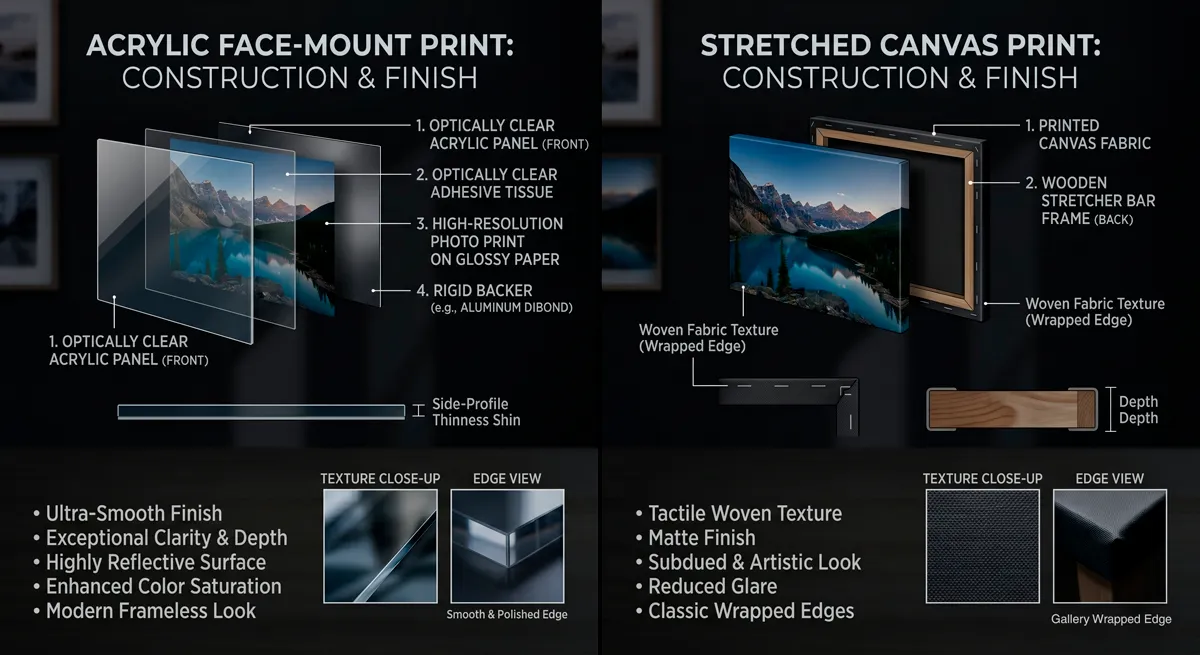
An acrylic face-mounted print — sometimes called an acrylic photo print or TruLife® acrylic — is produced by printing a high-resolution photograph onto professional-grade metallic or crystal photo paper, then bonding it face-forward behind a thick sheet of optically clear acrylic glass using optically clear adhesive.
The result is extraordinary. Light passes through the acrylic, refracts off the image, and creates a luminous, almost backlit glow. Colors appear deeper. Shadows have genuine dimension. The image seems to float behind glass — vivid, three-dimensional, alive.
This is the technique made famous by photographers like Peter Lik in Las Vegas showrooms and gallery settings worldwide — and it's available directly from independent fine art photographers as a Peter Lik alternative at a fraction of gallery pricing.
It isn’t. That’s just what acrylic face mounting does to a photograph printed on silver crystal paper. For a deeper look at the process, see my guide to acrylic luxury fine art printing.
What Is a Canvas Print?
A canvas print is produced by printing a digital image directly onto canvas fabric using inkjet technology, then stretching and stapling that canvas over a wooden frame — a process known as gallery wrapping.
Canvas has a long, respected history in the art world. Oil paintings have lived on canvas for centuries. That legacy lends canvas prints a familiar, warm, painterly quality that many people find approachable and comfortable in traditional or rustic home interiors.
Canvas prints are also considerably more affordable to produce and ship, which is why they’ve become a mainstream, mass-market product sold at every price point — from big-box home décor stores to professional photography studios.
Acrylic vs Canvas: A Side-by-Side Comparison
Color Vibrancy and Detail
Acrylic wins — and it isn’t close.
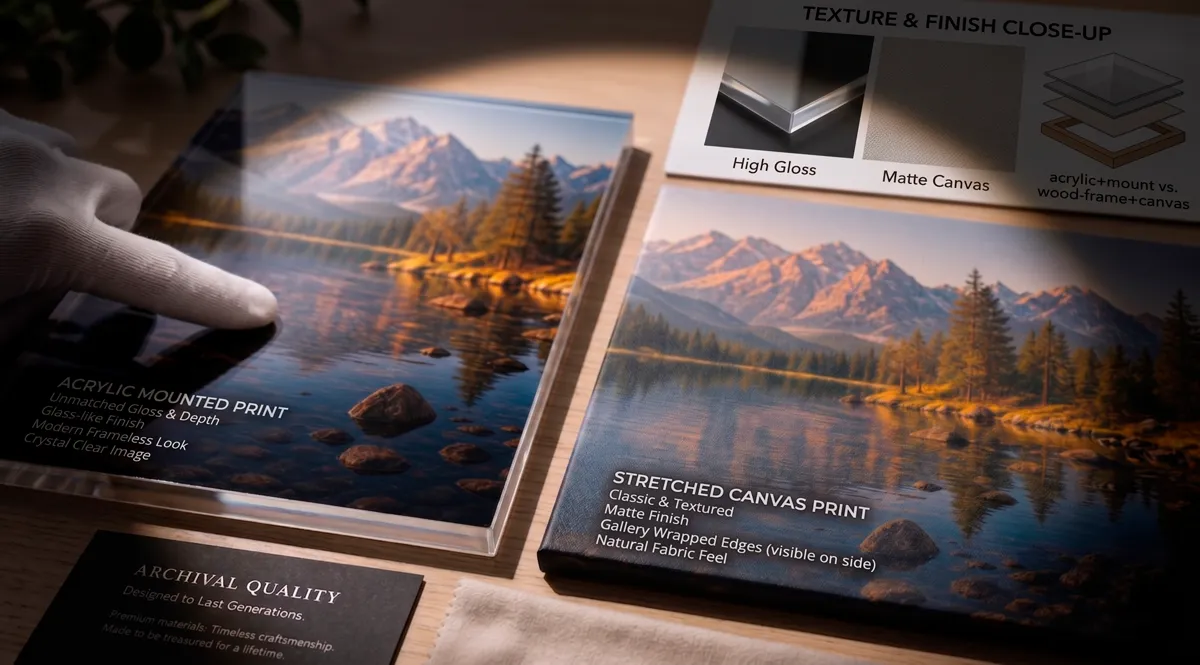
The textured surface of canvas fabric softens an image. Colors are warm and rich, but they are never as precise or vivid as the original photograph. Fine detail — the texture of rock in a mountain landscape, the feathers of a bird in flight, the delicate gradients of an aurora borealis — gets absorbed into the weave of the material.
Acrylic face mounting preserves every detail with absolute fidelity. The optically clear surface adds depth without distorting. On silver crystal metallic paper, colors achieve a luminosity that no other medium can match. For landscape photography in particular — my specialty — the difference is dramatic.

Longevity and Archival Quality
Acrylic wins.
Canvas, even with UV-resistant coating, is vulnerable over time. The fabric can warp, sag, or crack in environments with humidity fluctuations. UV exposure causes fading. Canvas prints are typically rated for 75–100 years under museum conditions — which sounds impressive until you compare it to properly produced acrylic face mounts.
A well-made acrylic print using archival photo paper, optically clear UV-filtering acrylic, and permanent adhesive is rated to last well over 100 years without color shift. The acrylic itself acts as a protective barrier against dust, humidity, and UV light. It is, genuinely, a collector-grade medium.
Durability and Care
Acrylic wins on longevity; canvas wins on ease.
Acrylic prints are scratch-resistant and exceptionally durable. The high-gloss surface does show fingerprints and requires occasional cleaning with a soft microfiber cloth. In rooms with very direct, harsh overhead lighting, glare can also be a consideration — though this is easily managed with placement, or by choosing a non-glare acrylic option.
Canvas is lighter, more forgiving in high-traffic spaces, and requires almost no maintenance. If you’re decorating a children’s playroom or a busy hallway, canvas may be the more practical choice.
Visual Impact and Presence
Acrylic wins for fine art photography.
Canvas has warmth. Acrylic has power.
If you want a photograph to dominate a room — to stop guests in their tracks, to serve as the unmistakable focal point of a living room, dining room, or executive office — acrylic is the medium. There is a depth and luminosity to a well-made acrylic print that canvas simply cannot replicate.
Canvas is better suited to softer, more intimate settings where a warm, painterly quality fits the aesthetic: traditional décor, rustic interiors, bedrooms where you want something quiet rather than commanding.
Aesthetics and Interior Fit
| Setting | Better Choice |
|---|---|
| Modern or contemporary home | Acrylic |
| Luxury condo or penthouse | Acrylic |
| Corporate office or hotel lobby | Acrylic |
| Traditional or rustic interior | Canvas |
| Bedroom with soft, ambient lighting | Canvas |
| High-humidity spaces (bathroom, kitchen) | Neither — consider metal |
| Gallery or collector display | Acrylic |
For a comparison of acrylic against another premium finish, see my guide to acrylic prints vs metal prints.
Price
Canvas wins on affordability. Acrylic wins on value for serious collectors.
Canvas prints are significantly cheaper to produce, which is reflected in retail pricing. This makes them accessible and appealing for decorating multiple rooms on a budget.
Acrylic prints command a higher price for good reason: the materials are more expensive, the production process is more demanding, and the result is in a different class entirely. When you’re purchasing a limited-edition, handcrafted fine art piece intended to hold both aesthetic and collectible value over decades, the investment in acrylic is justified.
Think of it this way: a canvas print is furniture. An acrylic face-mounted print on archival metallic paper is art.
A Note on Mass-Market Canvas vs. Handcrafted Acrylic
Here’s something worth understanding as a buyer.
Most canvas prints you encounter — even from photographers who call them “fine art” — are produced at commercial print labs, sometimes overseas, using consumer-grade inkjet printers. They are not handcrafted. They are not inspected individually. They are not limited editions in any meaningful sense.
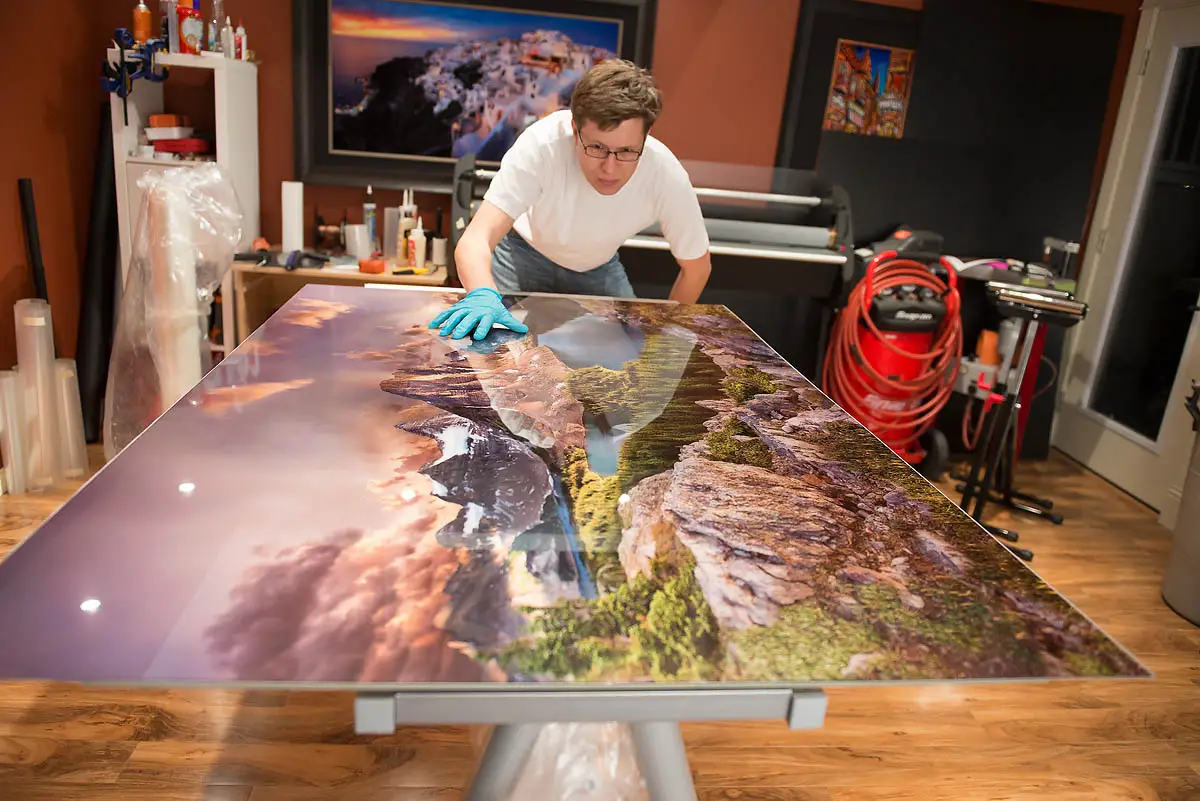
My acrylic prints are produced entirely by hand in my private Calgary studio. I print personally on premium silver crystal metallic paper. I face mount each piece individually. I inspect every print before it leaves my studio. Each work is signed, numbered, and comes with a certificate of authenticity.
This is not a mass-market product. It never will be.
Which Should You Choose?
Here’s my honest recommendation:
Choose acrylic if:
- You want maximum visual impact and luminosity
- You’re purchasing as a collector or long-term investment
- The piece will be displayed in a modern, contemporary, or luxury interior
- The photograph has rich colors, dramatic light, or fine detail you don’t want lost
- You want something that will genuinely stop people in their tracks
Choose canvas if:
- Budget is the primary consideration
- Your interior is traditional, rustic, or warm in tone
- The piece will be in a high-traffic or high-humidity area
- You want something lighter and easier to move or rearrange
Final Thoughts
Canvas prints have their place. For casual home décor and accessible price points, they’ve earned their popularity. But for fine art landscape photography — images that are meant to be experienced, not just hung — acrylic face mounting on silver crystal paper is in a different league.
After 15 years of handcrafting prints, I’ve never had a collector choose canvas and then wish they’d gone with acrylic. I have had collectors choose canvas to save money, display it for a year, and come back for the acrylic version.
The difference, once you see it in person, is difficult to forget.
If you’d like to explore what your favorite image from my gallery would look like as a handcrafted limited-edition acrylic print, I’m happy to walk you through the process personally. Browse the gallery, or reach out directly — I answer every message myself.
Alex Gubski is a luxury fine art photographer based in Calgary, Canada. He specializes in limited-edition, handcrafted acrylic face-mounted prints produced entirely in his private studio. Every piece is signed, numbered, and comes with a certificate of authenticity.
Ready to see acrylic in your space?
Browse the collection, explore pricing and finish options, or send me a photo of your wall for a free room mockup — no obligation, no sales staff.