
Triptych Photography Wall Art: A Guide to Three-Panel Fine Art Prints
You want scale. You want drama. You also need the piece to fit through the door and sit straight on the wall. Triptych photography wall art solves that tension. You split one photograph across three panels. You hang them in a row. The image still reads as one story — but each panel stays manageable.
Collectors and designers have used the triptych format for centuries. Today it shows up in luxury homes, hotel lobbies, and corporate spaces that need a single bold focal point. This guide explains how three-panel wall art works for fine art photography, when it beats one oversized print, and what to plan before you order.
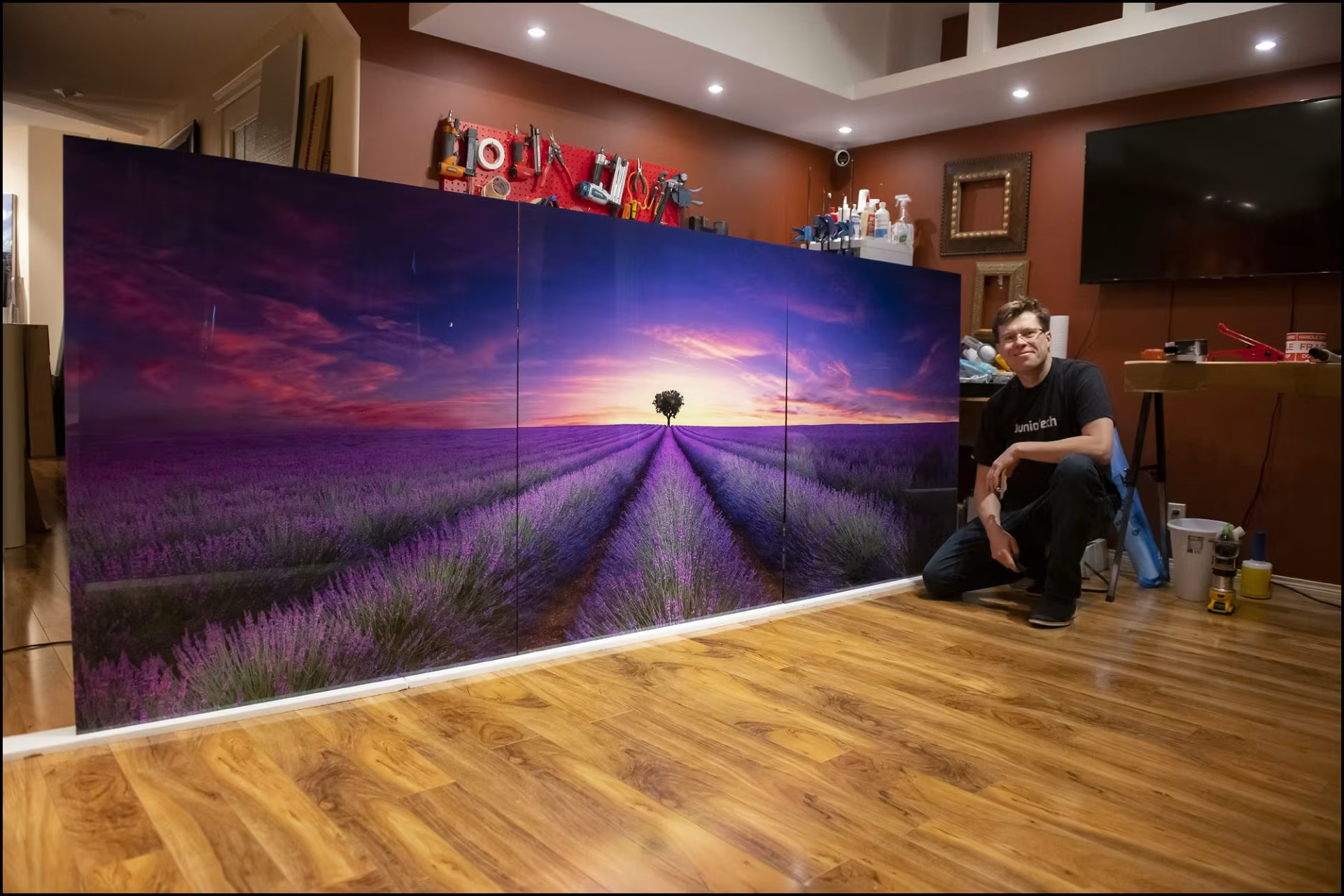
What Triptych Wall Art Means for Photography
A photographic triptych is not three random prints. It is one intentional composition divided across three separate substrates. You can split a single panoramic capture. You can also use three related frames from the same scene — though most luxury installs use one continuous image for a cleaner gallery read.
Each panel gets its own acrylic or metal face mount, its own hanging hardware, and its own crate slot for shipping. On the wall, gaps between panels create a subtle rhythm. Museums use that rhythm to slow the viewer down. Your living room can use it the same way.
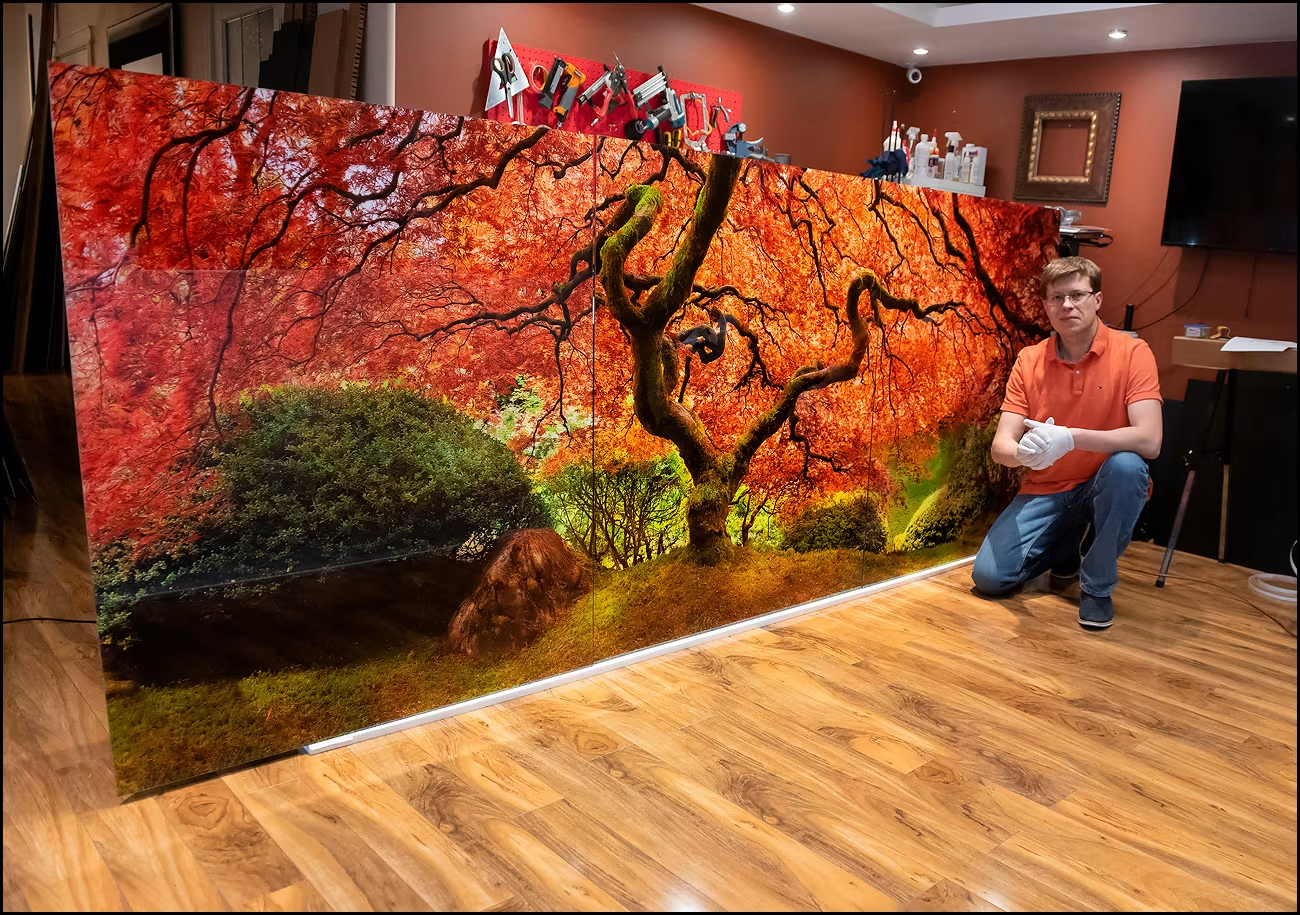
Why Collectors Choose Three-Panel Wall Art
Scale without a single impossible sheet. Printers cap the width of one acrylic panel. When you need a wider statement — above a sectional, behind a dining table, or across a double-height wall — a triptych pushes total width past single-panel limits. I offer triptych options when clients need prints larger than 95 inches on the long side; see print pricing and sizes for starting points.
Easier logistics. Three moderate panels fit elevators and stairwells more often than one rigid mega-panel. Installers level one panel, then align the others to it. You reduce the risk of a hairline stress issue in transit.
Design flexibility. Furniture and architecture rarely give you a perfect empty rectangle. A triptych lets you bridge a fireplace, follow the line of a sofa, or echo three windows in a great room. Interior designers often specify multi-panel art for that reason.
Visual energy. One huge print can feel static. Three panels add pause points. The gaps invite the eye to move. That motion suits landscapes, coastlines, and abstract color fields.
Design Rules That Keep the Image Unified
Plan the gap first. Measure your wall. Mark the center. Decide total width, then subtract two gaps. Divide the remainder by three. That math gives you panel width. Most homes look best with 1 to 3 inches between panels. Wider gaps feel contemporary. Tighter gaps feel like one continuous window.
Keep the horizon level. If your photograph includes a horizon or shoreline, align it across all three panels before you finalize split lines. Never cut through a subject’s face, a main tree trunk, or a lone peak unless you do it on purpose for a graphic effect.
Match finish across panels. Mixing gloss metal on one panel and matte canvas on another breaks the illusion. Stick with one medium — usually acrylic face-mount or ChromaLuxe metal — so color and reflectance stay consistent.
Light it as one piece. Aim accent lights so each panel gets similar intensity. Uneven lighting makes one panel look darker and breaks the triptych. Read How to Light Artwork in Your Home for beam angle and color temperature tips.
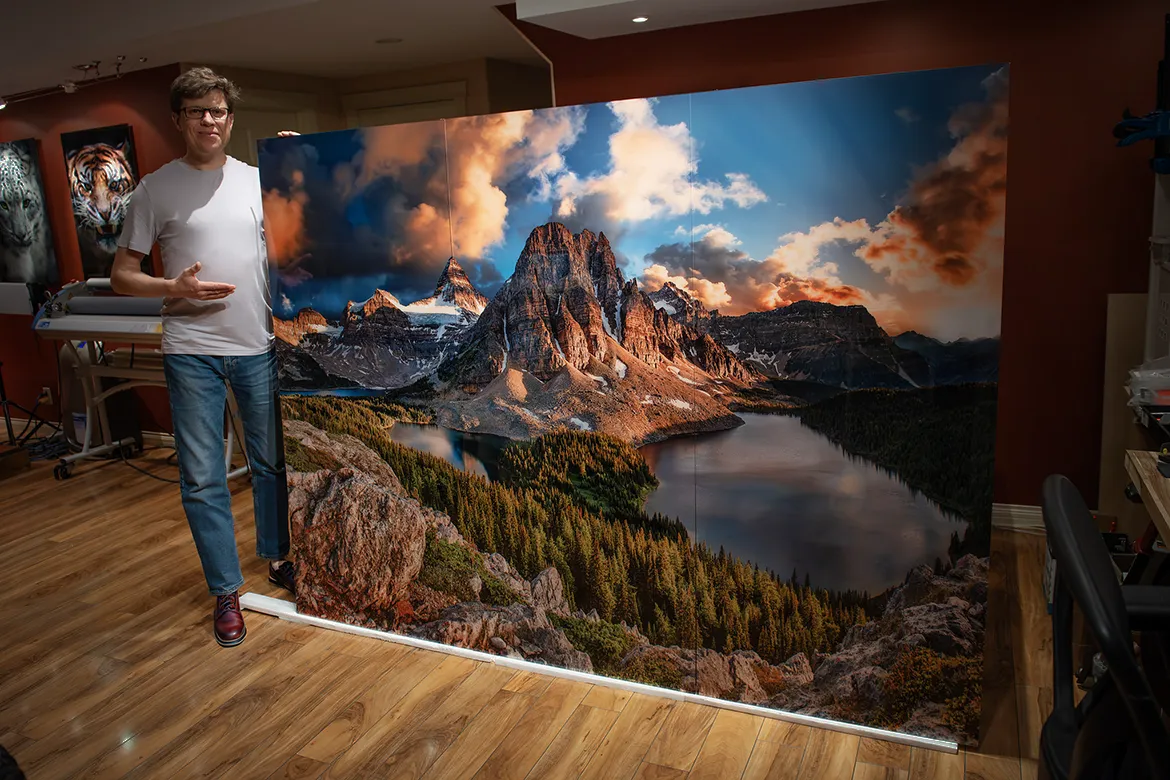
Finishing, Scale, and Installation
Acrylic face-mount remains my top choice for triptychs. The face-mount process laminates the photograph to polished acrylic. Colors stay saturated. Depth increases. When you stand off-axis, the surface still holds detail — important when viewers walk past a wide install.
Each panel ships with appropriate hanging hardware — often a French cleat or aluminum subframe for museum-mount pieces. Install the center panel first. Use a laser level. Hang the left and right panels to match height and gap width. Step back often. Small adjustments at the cleat beat large shifts later.
Every print I sell is limited edition. A triptych counts as one edition release when all three panels share the same image and size run. You receive a certificate that matches the edition number on the back of the work.
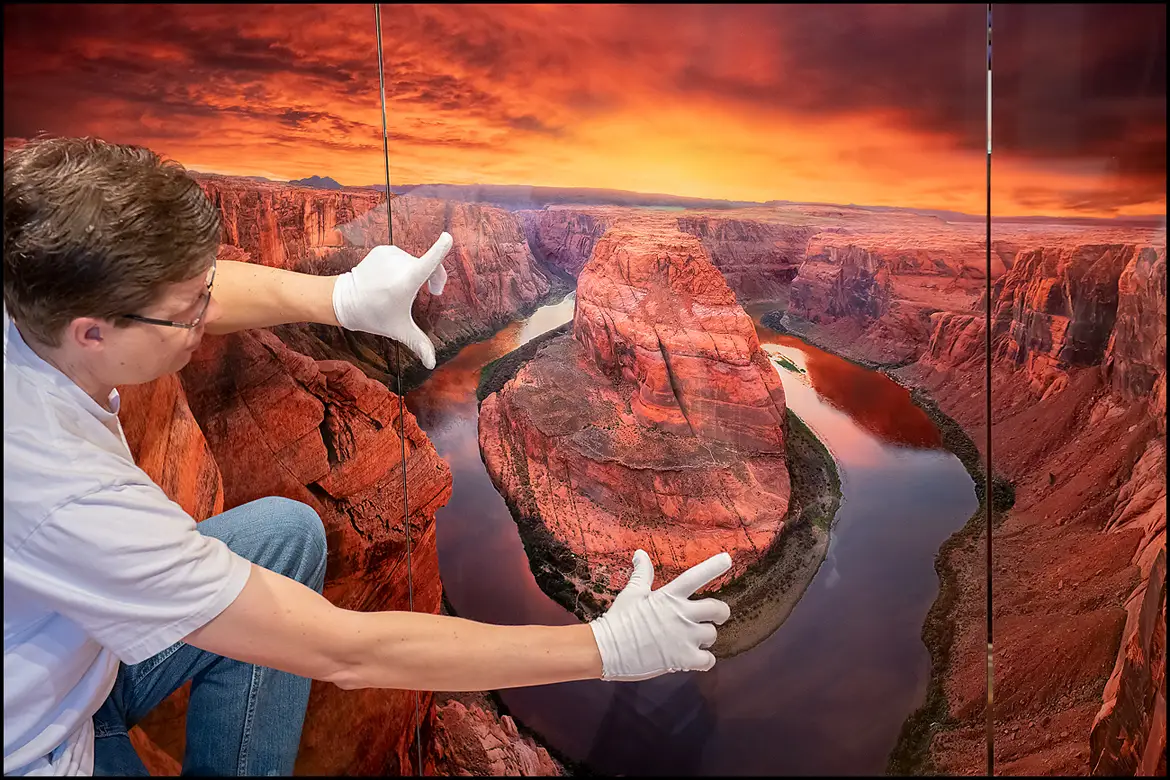
Not sure which finish or width fits your room? Email a photo of the wall with rough dimensions. I build a visual mockup so you can see the triptych in place before production starts. Start from the online gallery or browse collections by subject.
Choosing the Right Photograph for a Triptych
Wide panoramas translate easily. So do compositions with strong lateral flow — lavender fields, rolling clouds, ocean horizons. Vertical subjects work when the split lines fall in quieter areas of sky or foreground.
Check native resolution before you commit. A triptych demands more pixels than a small single print because each panel may still measure 30 to 40 inches wide. I review files before production and recommend adjustments when needed.
If you already love a piece in the gallery, ask about triptych layout for that image. Many scenes that were not shot as panoramas still crop well to a wide aspect when the subject allows. For common questions about acrylic mounting and care, see the acrylic print FAQ.
Quick Answers
Is a triptych more expensive than one print? You pay for three substrates, three mounts, and three times the handling. Total cost often lands close to one oversized single panel of similar total width — but you gain flexibility in shipping and install.
Can I hang panels stacked vertically? You can, though most photography triptychs run horizontally. Vertical stacks suit stairwells and narrow walls.
Do gaps hurt resale value? A well-planned triptych from a named artist holds value when edition numbers stay low and condition stays pristine. Document gap width and panel sizes for future owners.
Plan your three-panel statement
Triptych photography wall art turns a wide wall into a destination. Tell me your room dimensions and your favorite image. I will help you choose finish, panel size, and layout.