
Understanding Lumachrome™
I often being asked if I offer my prints in Lumachrome finish. So, I decided to write a comprehensive guide to varieties of acrylic face-mount finish and explain what Lumachrome™ actually is.
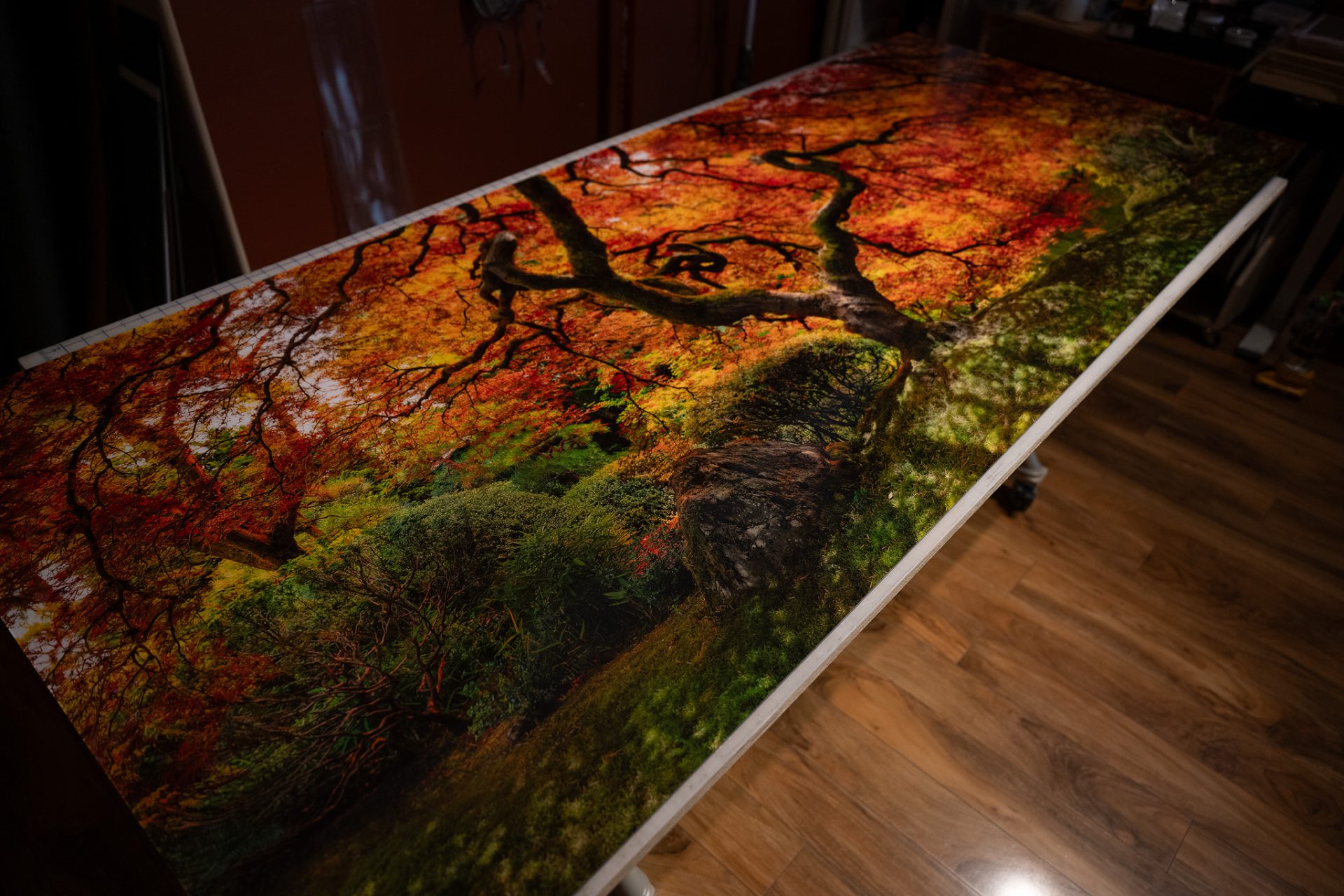
In the world of fine art photography, few printing techniques attract as much attention as Lumachrome™. Known for its remarkable color vibrancy, apparent depth, and luminous appearance, this proprietary process has become associated with high-end photographic artwork displayed in luxury galleries.
As a fine art photographer who personally produces acrylic face-mounted prints, I am frequently asked whether I offer Lumachrome prints and how my own finishing process compares.
When I originally wrote this article, I understood Lumachrome to be a variation of traditional acrylic face-mounting using metallic photographic paper. However, additional information about its construction has clarified an important distinction.
Lumachrome is not printed on conventional photographic paper. Instead, it uses a specially prepared transparency layer combined with a proprietary opaque white backing.
This difference deserves a closer examination because it helps explain what distinguishes Lumachrome from other premium photographic printing methods.
What Is Lumachrome™?
Lumachrome™ is a proprietary photographic printing process associated with Nevada Art Printers. It combines a printed transparent image layer, a specially formulated opaque white backing, and optical acrylic mounting to create a distinctive visual presentation.
Unlike conventional photographic prints, where the image is printed onto paper containing its own reflective base, Lumachrome separates the image-bearing layer from the reflective background.
The image is produced on a transparent medium, while a proprietary opaque white layer is applied behind it. This backing provides the foundation against which the image becomes visible and determines how light interacts with the printed colors.
The completed image assembly is presented beneath optically clear acrylic, producing the smooth, glossy surface characteristic of luxury photographic prints.
Although acrylic face-mounting itself is a well-established technique, Lumachrome’s combination of transparency printing and a separate opaque backing represents a genuine difference from conventional paper-based photographic prints.
The Acrylic Face-Mount Process: Breaking Down the Technique
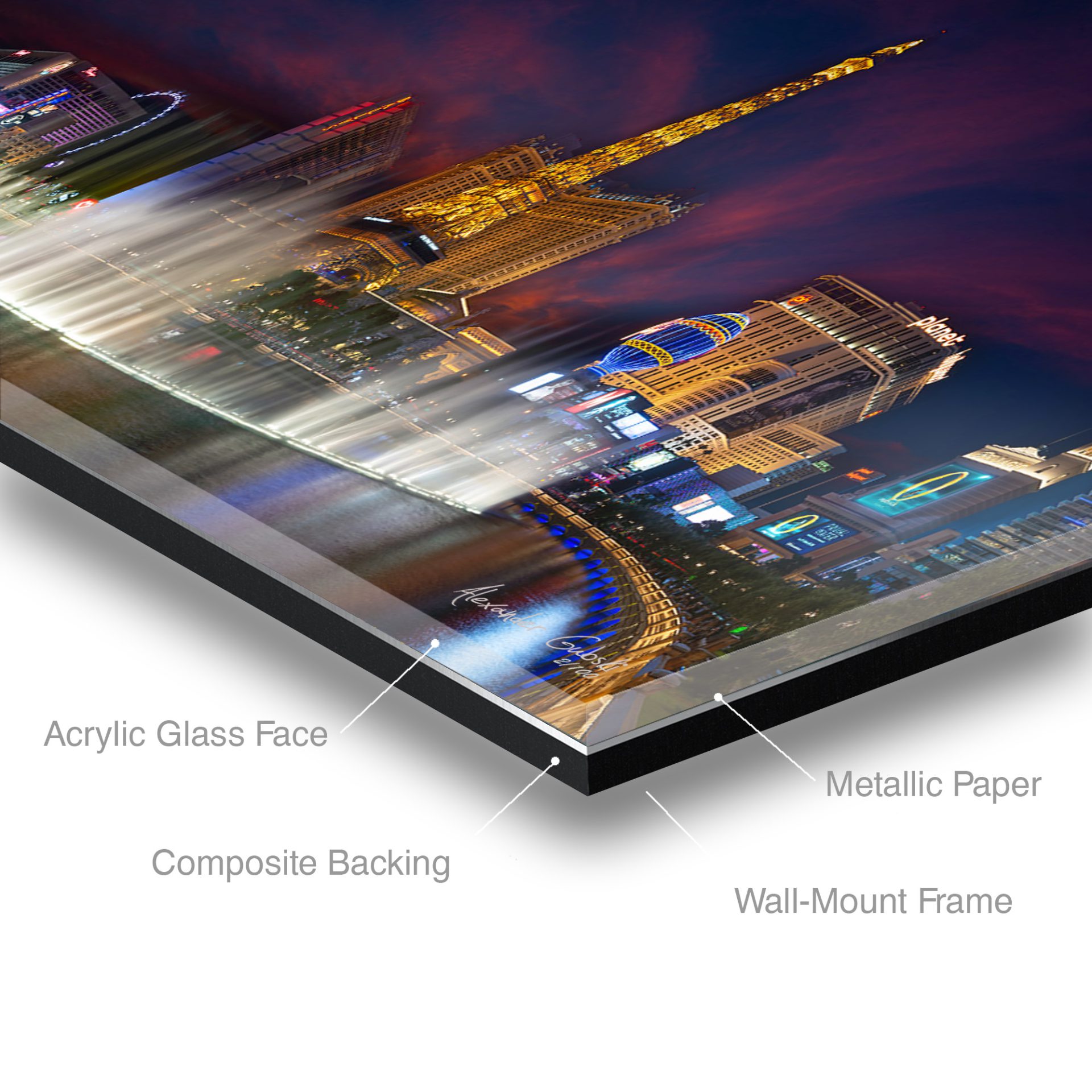
The acrylic face-mounting technique is a relatively straightforward process. It involves printing a photograph on metallic or glossy photographic paper. Metallic paper sheen enhances the vibrancy of the colors and the depth of the image. The print is then mounted between two layers: a clear acrylic front panel and a backing material. The acrylic front acts as a protective layer that also serves to amplify the colors and contrast of the print by magnifying the reflective properties of the metallic paper.
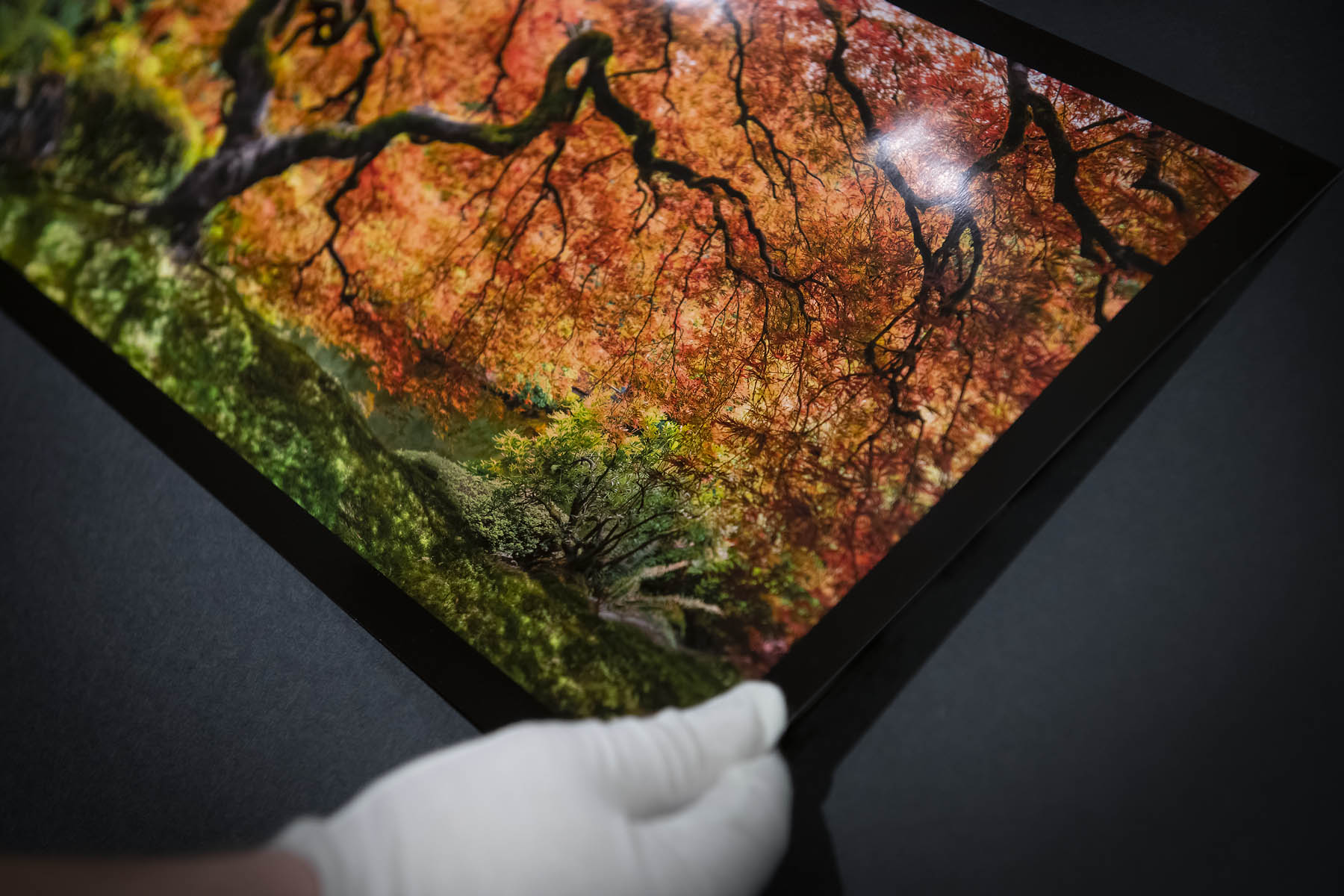
How Does the Lumachrome Process Work?
Several manufacturers are well-known for producing high-quality metallic inkjet photo papers. These papers are favored by photographers and printmakers for their ability to enhance the depth, contrast, and vibrancy of images. While Nevada Art Printers doesn’t specify which brand of metallic paper they use it is most likely one of listed below:
Kodak
– Kodak Professional Endura Metallic: One of the most popular and widely used metallic photo papers. It’s known for its rich, vibrant colors, enhanced detail, and unique gloss finish. Kodak’s metallic paper is highly reflective and is often used for high-contrast photography and commercial printing.
Fujifilm
– Fujifilm Pearl Photo Paper: This metallic paper offers excellent color reproduction, sharpness, and a smooth finish. Pearl paper is popular for fine art prints and high-quality photographic reproductions, delivering a pearlescent, glossy finish.
Canson Infinity
– Canson Infinity PhotoSatin Premium RC: Canson produces high-quality papers, and its metallic offering provides superior clarity and enhanced color depth. The metallic inkjet paper from Canson is popular among fine art photographers and archival-quality prints.
Red River Paper
– Red River Polar Pearl Metallic: This metallic photo paper is widely used for inkjet printing. It offers a pearlescent finish with deep contrast and vivid color reproduction, making it a favorite among professional photographers looking for affordable, high-quality metallic paper.
Hahnemühle
– Hahnemühle Photo Rag Metallic: Hahnemühle is renowned for its premium-quality fine art papers. Their metallic inkjet paper combines a metallic finish with a fine art paper base, providing excellent texture, detail, and reflectivity.
Ilford
– Ilford Galerie Prestige Metallic Gloss: Known for high-end photo printing papers, Ilford’s metallic option delivers a high-gloss finish with excellent sharpness and vibrant color depth, suitable for art galleries and exhibitions.
These brands gain global recognition for their superior metallic photo papers, each offering distinct characteristics suited to various types of prints and uses. Each has its own take on metallic surfaces, allowing photographers to choose based on preference for gloss, durability, or color reproduction quality.
Key benefits of Acrylic Face-mount
1. Vibrancy and Depth: The acrylic surface amplifies the print’s colors, making them appear more vivid, while the metallic paper adds depth and a luminous glow. This makes acrylic face-mounting especially effective for high-contrast photography such as landscapes, cityscapes, and abstract art.
2. Durability: The acrylic not only enhances the visual aspects of the print but also serves as a protective layer. Acrylic is resistant to UV rays, moisture, and physical damage, ensuring that the artwork remains pristine for decades.
3. Sleek, Modern Presentation: Many photographers and collectors prefer acrylic face-mounted prints because of their frameless design. The clean, contemporary aesthetic of a facemount print, often paired with a floating frame, gives the image a “floating” appearance on the wall, ideal for modern interiors or galleries.
Lumachrome vs. Other Fine Art Acrylic Face-Mount Techniques
The most interesting aspect of Lumachrome is its layered construction.
Rather than relying on a photographic paper substrate, the process separates the printed image from the background responsible for reflecting light.
The essential elements are:
- Transparent image layer: The photographic image is printed onto a transparency medium rather than conventional opaque photographic paper. This allows the image-bearing layer and the background to perform separate optical functions.
- Proprietary opaque white backing: A specially formulated white layer is positioned behind the transparency. It provides a reflective background and contributes to the image’s perceived brightness, contrast, and color presentation.
- Optical acrylic face-mounting: The image assembly is mounted behind clear acrylic, creating a smooth optical interface and a premium, contemporary appearance.
- Structural backing: The finished artwork incorporates backing materials that provide rigidity, protection, and a suitable mounting arrangement.
The precise composition of the transparency, white backing, and other proprietary materials is not publicly established in sufficient detail to independently assess every aspect of the process.
Nevertheless, the fundamental construction is distinct from printing an image directly onto metallic or glossy photographic paper.
Lumachrome Iridium Coating
Some descriptions of Lumachrome refer to iridium or iridium-infused materials as part of its proprietary technology.
Iridium is a rare metallic element with specialized industrial applications. However, the precise role of iridium, if any, in the Lumachrome process is not sufficiently documented in publicly available technical specifications.
It would therefore be premature to conclude that Lumachrome contains a particular concentration of metallic iridium or that this ingredient is responsible for its visual characteristics.
Major paper companies typically do not associate iridium, a rare and durable metal, with photographic papers or inkjet printing processes. Instead, popular manufacturers create the reflective, high-contrast effects in their metallic papers using aluminum or mica-based particles.
Ilford’s “Galerie Metallic Gloss” photo paper mentions the use of an “iridium finish” on their website. The finish gives images a striking, three-dimensional appearance, but it doesn’t specify that they use actual iridium metal coating itself. Instead, the term “iridium finish” likely refers to the reflective, metallic sheen that enhances depth and vibrancy in prints. Manufacturers generally create the metallic properties in such papers using fine metallic particles or pigments, often using materials like aluminum instead of rare and expensive elements like iridium. This creates a high-gloss, reflective surface that interacts with light to give the images a vivid, luminous quality.
Is the Lumachrome™ a unique technology?
To understand the distinction, it helps to look at the alternative approach used by many professional fine art printers, including my own studio.
Metallic photographic papers are designed to produce a luminous, reflective appearance without requiring a separate transparency and white backing.
Their specially engineered surfaces interact with light to create the pearlescent highlights, rich colors, and apparent depth that make metallic prints particularly attractive for landscape and architectural photography.
When these prints are face-mounted behind clear acrylic, the optical effect can be quite striking.
Both approaches seek to produce visually engaging photographic artwork, but they achieve their results through different material constructions.
| Feature | Lumachrome™ | Metallic Paper Acrylic Face-Mount |
|---|---|---|
| Image medium | Printed transparency | Metallic photographic paper |
| Reflective background | Separate proprietary opaque white backing | Integrated into the photographic paper |
| Front finish | Optical acrylic | Optical acrylic |
| Visual characteristics | High clarity, vibrant color and apparent depth | Luminous highlights, vibrant color and apparent depth |
| Process | Proprietary layered construction | Established professional face-mounting technique |
| Material options | Defined by the proprietary process | Multiple professional paper and acrylic choices |
Neither construction should be judged solely by its technical description. What ultimately matters is the appearance of the finished artwork under the lighting conditions in which it will be displayed.
Alternatives to Lumachrome™: Affordable Facemount Prints
Although many market Lumachrome as a premium product, photographers have plenty of other options for achieving high-quality acrylic face-mounted prints. Many other professional printers offer similar processes at various price points, often without the proprietary branding. I myself offer an alternative face-mount product. I’m a Canadian fine-art photographer and printer, and I offer affordable acrylic face-mounted prints that rival Lumachrome™ in quality and visual impact.

My prints utilize the same core process: high-definition prints on metallic photo paper, face-mounted to premium clear acrylic. I focus on creating large-format landscape and fine art prints that exhibit the same depth, sharpness, and color vibrancy typically associated with Lumachrome™ prints. My prints, like Lumachrome™, are also of archival quality, designed to last over 100 years without fading. Yet, my prints are often more affordable. This makes them a practical alternative for photographers or collectors who want the benefits of acrylic face-mounting without the premium price tag associated with proprietary brand names like Lumachrome.
Conclusion: Lumachrome and the Acrylic Face-Mount Method
Lumachrome™ is more than simply a conventional metallic photographic print mounted behind acrylic.
Its use of a transparent printed image combined with a proprietary opaque white backing distinguishes its construction from traditional photographic paper-based processes.
This is an important clarification to my original understanding of the technology.
At the same time, Lumachrome and premium metallic paper face-mounted prints share many of the qualities that collectors appreciate: vibrant colors, luminous highlights, exceptional clarity, and a contemporary gallery presentation.
They achieve these characteristics through different combinations of materials and optical techniques.
As a photographer and printmaker, I find these distinctions fascinating. But I also believe that the ultimate measure of any fine art print is not the complexity of its production process or the exclusivity of its trade name.
It is the visual impact of the finished artwork and the pleasure it brings to its owner.